What Does the Sharp Rise in Pro-Independence Support in the Annual Cross-Strait Survey Reflect?
United Daily News Commentary, September 21, 2026
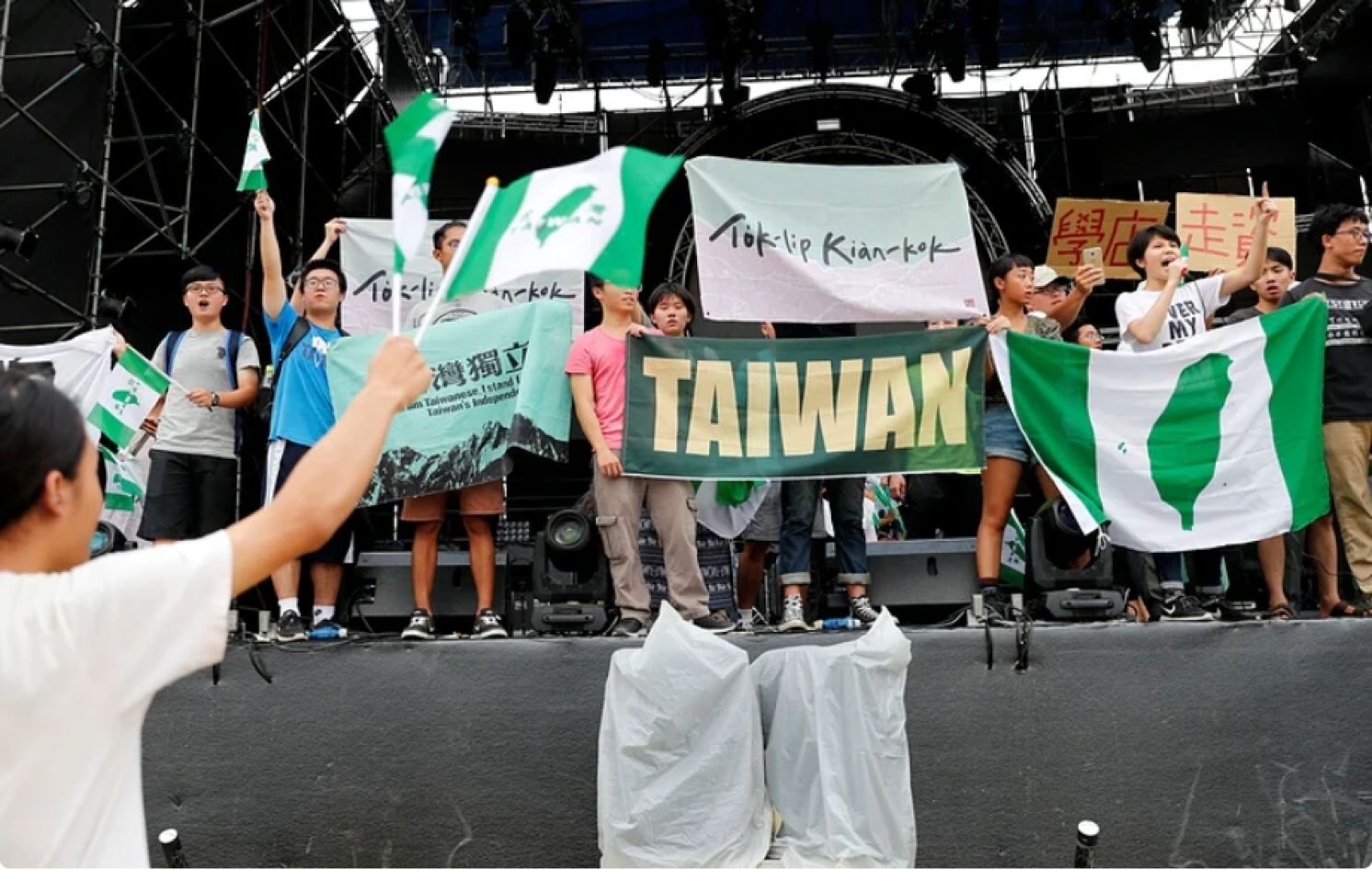
On the eve of the second meeting between President Donald Trump of the United States and Chinese President Xi Jinping, the United Daily News released its annual survey on cross-strait relations. The share of respondents advocating independence had risen sharply by 7 percentage points from last year to 32 percent. This is a warning sign for whether cross-strait relations can move toward peace, and it poses a test for how the United States and China handle the Taiwan, as well as how Taiwan responds to changes in the situation.
According to the long-term annual survey on support for Taiwan independence, there have been only two years in which the proportion advocating independence was higher than this year's 32 percent: 35 percent in 2020 and 34 percent in 2021. However, those figures should be viewed in connection with the global pandemic. At the time, mainland China strictly implemented its "dynamic zero-COVID" policy and comprehensive lockdowns, prompting widespread complaints from foreigners in various countries. In addition, rumors circulated that the pandemic had resulted from a leak involving a biological weapon in the mainland, further worsening perceptions of the mainland.
The significant increase in support for independence this year, by contrast, has been caused by cross-strait tensions. First, Taiwan has seen an increasing number of actions aimed at "resist China to protect Taiwan," while the United States has provided Taiwan with backing through its strategy of "using Taiwan to contain China." Second, the mainland has intensified its efforts to "oppose independence and promote unification," ranging from diplomatic containment to the mainland coast guard conducting "normalized" patrols in waters around Kinmen and eastern Taiwan. These internal and external factors have supported the sentiment advocating independence.
At the time of this annual survey, intense tug-of-war and clashes of thinking have emerged across multiple areas of cross-strait relations, further increasing public concerns and feelings of insecurity. The first issue concerns Taiwan in the context of the second Trump-Xi meeting. Arms sales to Taiwan have currently been suspended, the prospect of U.S. forces intervening to defend Taiwan has become increasingly unreliable, and President Trump's overtures towards the mainland—all these signs have left people in Taiwan deeply uneasy.
Second, academic circles on both sides of the Taiwan Strait have begun to address the substantive meaning of "One Country, Two Systems." On the Taiwan side is National Changhua University of Education professor Lee Chi-tse's proposal for "One Country, Two Systems." On the mainland side, more than 20 scholars in Hong Kong have drafted a 12-point "Taiwan plan" for One Country, Two Systems. Regardless of whether these proposals are practically feasible, the fact that people have begun exploring an issue that previously no one dared to touch has also raised concerns within Taiwan.
The third development is that mainland China has laid its cards on the table regarding the ultimate outcome of cross-strait relations at an official forum. At the recently concluded Beijing Xiangshan Forum, the mainland’s former ambassador to the United States Cui Tiankai told representatives of diplomatic and defense agencies from nearly 100 countries and regions: "The Taiwan issue is the red line of all red lines, and [we will] resolve this issue once and for all."
He said: "China has no illusion that the matter [national reunification] will be easy, but external attempts to divide China and obstruct reunification are bound to fail." He also told American scholars: "You had better believe that we are serious."
Although Cui has already stepped down from his post, the fact that he was able to make such pointed statements on such an occasion reflects, to some extent, the thinking of mainland Chinese authorities. If the mainland wants to ensure that the issue is resolved "once and for all," its options amount to relying on the law (the Anti-Secession Law), the military (non-peaceful means), and arrangements for comprehensive governance in the future.
If this represents mainland China calling Taiwan's hand and revealing its own cards, then how should Taiwan respond? And how should the United States respond? The mainland's move could potentially further increase the proportion of people in Taiwan who advocate independence. But what Taiwan’s government needs to tell the public is this: How likely is Taiwan to successfully achieve independence (meaning the Republic of China completely breaking away from “China,” equivalent to independence)? What price would the people of Taiwan pay along the path towards independence?
Taiwan’s people ought to be able to discuss the possibilities for Taiwan’s future freely, but in recent years Taiwan's public discourse appears to have been reduced to a single narrative, while it has become increasingly difficult for Taiwan to pursue a path of its own. At the upcoming second Trump-Xi meeting, Taiwan will once again be on the menu. Vital issues to Taiwan, including arms sales and U.S. policy position, will depend on the outcome of the U.S.-China negotiations.